
Why Multi-Agent Systems Fail in Production
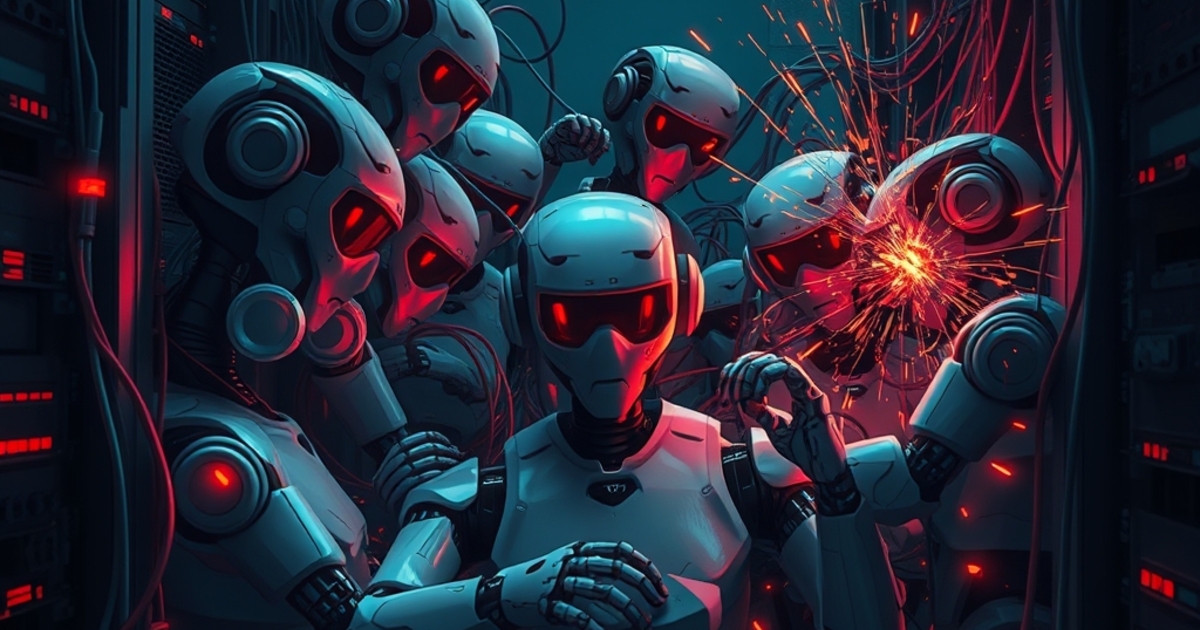
Too Many Agents, Not Enough Design
Multi-agent systems break in predictable ways. The hard part is not getting multiple agents to talk. The hard part is making them exchange the right work, in the right format, with the right escalation path when something goes sideways.
The 5 Failure Points
- Bad boundaries. Two agents are responsible for the same thing, so nobody is really responsible.
- Messy handoffs. One agent sends another a blob of text instead of structured state, and errors compound.
- No replay or evals. Failures happen, but the team cannot inspect them cleanly or catch regressions.
- Memory confusion. Temporary context, retrieval, and long-term memory get mixed together.
- No operator visibility. Humans only see the output, not the path that produced it.
This is why the architecture matters more than the number of agents.
What Actually Works
Make every agent legible. Each one should have a specific role, a limited toolset, a clear input format, and a known failure mode. If a handoff cannot be inspected by a human in under a minute, it is too messy.
You also need a bias toward fewer agents. One solid agent plus a deterministic workflow often beats a six-agent orchestra that nobody can debug.
Production Rule
If your operators cannot answer these questions quickly, you are not ready:
- What was the agent supposed to do?
- What context did it actually have?
- What tools did it call?
- Where did the failure begin?
- Who gets alerted, and when?
That is why I treat architecture, evals, and operator workflow as one system.
If you want help tightening that system, start with the AI Agent Architecture page. Then read the stack for memory, evals, and observability.
Continue Reading